
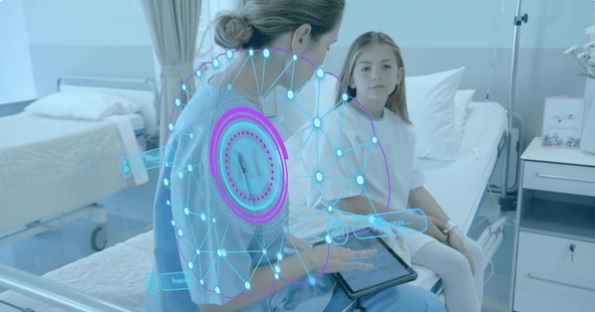
In today’s time, AI technology is being used in almost every field, but its role in healthcare is the most important. With the help of AI, information related to a person’s daily activities, medical history (past), and even possible future health risks can be analyzed accurately.
At present, AI is helping doctors and healthcare systems to diagnose diseases early, plan better treatments, and monitor patients more effectively. Because of AI support, patient care as well as medical efficiency is improving day by day, leading to faster, more accurate, and more personalized healthcare services.
Artificial Intelligence (AI) and modern technology are transforming healthcare by making medical services faster, more accurate, and more accessible. From early disease detection to personalized treatment, technology is improving both patient care and medical efficiency.
Early Diagnosis and Disease Prediction
The biggest benefit of AI has been seen in medical laboratory systems. Because of AI, it has become possible to identify a person’s chronic health conditions at an early stage. Generally, there are many diseases that cannot be detected in their first stage, but with the help of AI, these diseases can now be identified much earlier.
This works like a lifesaver for both doctors and patients. Early detection allows treatment to begin at the initial stage, which greatly increases the chances of recovery. AI has proven to be especially beneficial in managing and detecting serious conditions such as cancer, diabetes, and heart-related diseases.
AI-powered systems can analyze medical images, lab reports, and patient data to detect diseases such as cancer, diabetes, and heart conditions at an early stage. Early diagnosis helps doctors start treatment sooner and improves survival rates.
Personalized Treatment
Using patient history, genetics, and lifestyle data, AI helps doctors design personalized treatment plans. This approach increases treatment effectiveness and reduces side effects compared to one-size-fits-all treatments.
Earlier, doctors faced many difficulties in understanding a patient’s medical history because all reports were maintained in hard-copy form. If any report was lost, it became very challenging for doctors to know the patient’s past medical condition. This often affected accurate diagnosis and treatment.
However, in the present time, patient history and medical records are digitally stored and can be easily accessed through hospital systems. Because of this, doctors no longer face such problems, and complete patient history is available in one place.
With the help of AI, doctors can now also access lifestyle-related data, such as daily habits, activity levels, and health patterns. This helps doctors understand a patient’s lifestyle better and provide more accurate and personalized treatment.
Robotic Surgery and Automation
Robotic-assisted surgeries allow doctors to perform complex procedures with high precision and minimal invasion. This results in less pain, faster recovery, and shorter hospital stays for patients.
Earlier, even a small surgery required a patient to stay in the hospital for many days. But in the present time, with the help of AI, medical science has developed so much that surgeries are now less painful, and patients do not need to stay in the hospital for a long time anymore.
Telemedicine and Remote Care
Technology enables patients to consult doctors online through video calls and mobile apps. Remote monitoring devices track vital signs like blood pressure, glucose levels, and heart rate, helping manage chronic diseases from home.
Drug Discovery and Research
AI speeds up drug discovery by analyzing vast datasets and predicting how different compounds will react in the human body. This reduces research time and cost while bringing new medicines to market faster.
Hospital Management and Efficiency
AI helps hospitals manage appointments, patient records, and resource allocation. Automated systems reduce administrative workload, allowing healthcare professionals to focus more on patient care.
Challenges and Ethical Considerations
Despite its benefits, AI in healthcare faces challenges such as data privacy, security risks, and the need for accurate, unbiased data. Ethical use and proper regulations are essential to ensure patient safety and trust.
Note
AI and technology are shaping the future of healthcare by improving diagnosis, treatment, and overall patient experience. With responsible use and continuous innovation, these technologies can make healthcare more efficient, affordable, and accessible for everyone.

dlrhdswpexefsklngwyntdiivspstz