
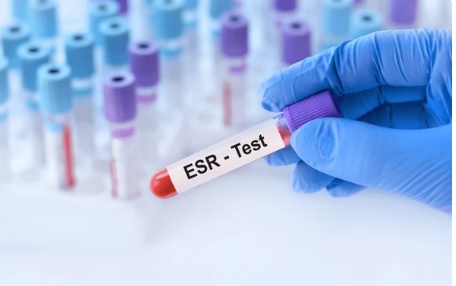
Erythrocyte Sedimentation Rate (ESR)
Erythrocyte Sedimentation Rate, also known as ESR, is a blood test that measures how quickly red blood cells (erythrocytes) settle at the bottom of a test tube in one hour.
- If they settle faster than normal, it usually means there is inflammation or infection in the body.
- It helps doctors detect conditions like infections, inflammation, autoimmune diseases, and some chronic illnesses.
ESR is a simple blood test that shows the level of inflammation in the body. Its main benefits are:
Detects hidden inflammation in the body
If there is an infection outside the human body, it becomes visible, but if there is an infection inside the body, a normal person cannot detect it. That is why this test helps in finding out internal infections. If there is any kind of inflammation in the body, the ESR level increases.
Helps in detecting infections
If there is any infection inside the body, this test helps in detecting it. Generally, internal infections are caused by bacteria or viral infections. Since these infections occur inside the human body, this test becomes very important for a person. ESR can rise in bacterial or viral infections, which helps doctors identify the illness.
Helps identify chronic diseases
Arthritis
• TB
• Autoimmune diseases
In these conditions, ESR is often elevated, which helps understand the severity of the disease.
Helps monitor the progress of a disease
If any treatment is going on in the body, this test shows whether it is working properly or not. In other words, it helps to know whether the medicines being given are functioning effectively or not. If a treatment is going on, the ESR test shows whether the treatment is working or not.
Indicates the overall health condition of the body
This test shows how much inflammation or infection the body is dealing with internally.
| Erythrocyte Sedimentation Rate | |||
| Test Name | Unit | Bio. Ref. Interval | Method |
| Erythrocyte Sedimentation Rate | mm/hr | 0-10 | Modified Westergren |
ESR provides an index of progress of the disease and is widely used as an indicator of inflammation, infection, trauma, ormalignant diseases. Changes are more significant than a single abnormal test
It is specifically indicated to monitor the course or response to the treatment of diseases like rheumatoid arthritis, tuberculosis bacterial endocarditis ,acute rheumatic fever ,Hodgkins disease, temporal arthritis , and systemic lupus erythematosis and to diagnose and monitor giant cell arteritis and polymyalgia rheumatic.
An elevated ESR may also be associated with many other conditions, including autoimmune disease, anaemia,
Infection, malignancy, pregnancy, multiple myeloma, menstruation, and hypothyroidism.
Although a normal ESR cannot be taken to exclude the presence of organic disease, its rate is dependent on various physiologic and pathologic factors.
The most important component influencing ESR is the composition of plasma. High level of C-Reactive Protein, fibrinogen, haptoglobin, alpha-1antitrypsin, ceruloplasmin and immunoglobulin’s causes the elevation of Erythrocyte Sedimentation Rate.
Drugs that may cause increase ESR levels include: dextran, methyldopa, oral contraceptives, penicillamine, procainamide, theophylline, and Vitamin A. Drugs that may cause decrease levels include: aspirin, cortisone, and quinine
