
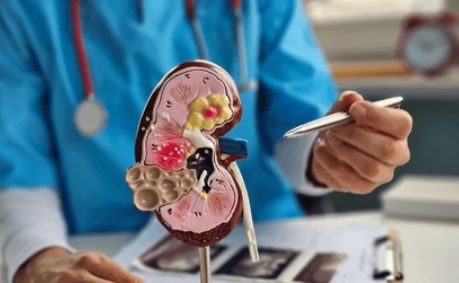
Kidney stones form when certain substances in your urine become too concentrated and crystallize, gradually growing into hard, stone-like deposits. Several factors can contribute to this process, and often more than one reason is involved. Here is a clear and detailed explanation:
Main Causes of Kidney Stone
Not Drinking Enough Water
If a person does not drink 5 to 6 liters of water daily, it can become very harmful for the body. In the beginning, the effects are not noticeable, but later it can turn into a serious issue. That is why it is important for a person to drink at least 4 to 5 liters of water every day. Low water intake is one of the biggest reasons.
When you drink less water:
- Your urine becomes very concentrated
- Minerals like calcium, uric acid, and oxalate do not dissolve properly
- These begin to stick together and form crystals → stones
High Levels of Certain Minerals
If a person’s body is not balanced — meaning if the level of any element in the body becomes higher than normal — it can also be very harmful. That is why it is important to always keep these levels well-maintained.
Some people naturally have higher levels of:
- Calcium
- Oxalate
- Uric acid
- Cystine (rare)
When these levels rise beyond a point, crystals form easily.
Diet

If anything in the body becomes more than what is needed, it also becomes very harmful. To keep the body healthy, the percentage of every element must be properly maintained. In today’s time, if a person does not pay attention to their food habits or diet, they may have to face many serious diseases. That is why one should always take care of their diet.Certain foods increase the risk:
- Very salty foods (salt increases calcium in urine)
- Excess animal protein (meat, fish, eggs → increases uric acid)
- Foods high in oxalate (spinach, almonds, beets, chocolate)
- Too much sugar or sugary drinks
- High intake of soda (especially cola)
Obesity and Lifestyle

Being overweight can change the acid balance in urine, making stone formation more likely. In today’s time, when a person’s weight becomes more than what is suitable for their age and height, it causes a lot of problems. Excess fat starts to accumulate, and along with that, the acid balance in the urine also becomes disturbed — this is another major issue. Being overweight affects the kidneys significantly and can lead to serious complications.
Medical Conditions
Some conditions increase stone risk:
- Hyperparathyroidism (increases calcium)
- Gout (raises uric acid)
- Urinary tract infections (UTIs) – especially for struvite stones
- Chronic diarrhea or bowel diseases (Crohn’s, IBS) reduce absorption and increase oxalate
Genetics / Family History
Some diseases depend on family history. This means that if members of your family have suffered from kidney stones, there is a possibility that you may also develop kidney stones. If someone in your family has kidney stones, your risk increases because:
- Your body may naturally produce more stone-forming substances
- You may inherit certain metabolic patterns
Certain Medicines and Supplements
Some drugs and supplements can trigger stones, such as:
- Excess vitamin D
- Calcium supplements (if taken incorrectly)
- Diuretics (some types)
- Certain antibiotics
- Antacids with calcium
- Medications for HIV
Types of Kidney Stones and Their Causes
Generally, kidney stones are of four types.
- Calcium Oxalate Stones (Most Common)
- Uric acid stone
- Struvite Stones
- Cystine Stones
Calcium Oxalate Stones (Most common)
If a person drinks very little water, it becomes a serious problem. A person should ideally drink 5 to 6 liters of water daily, but nowadays people are so busy that they cannot take proper care of their health. They are neither able to follow a good diet nor able to drink enough water. A minimum of 4 to 5 liters of water every day is very important.
If you eat too much salt or frequently consume salty foods, it is also dangerous for the body.
In today’s busy lifestyle, people are not getting enough sunlight, which leads to a significant deficiency of Vitamin D. Because of this, people start taking Vitamin D supplements or medicines. But when these supplements are taken excessively, they can become very harmful for the body. That is why whenever a person needs to take any vitamin supplement or medicine, they should always take it only after consulting a doctor. Otherwise, excessive Vitamin D can become a cause of kidney stones.
- Low water intake
- High oxalate foods
- Too much salt
- High vitamin D
- Metabolic issues
Uric Acid Stones
A person should eat according to the needs of their body. If someone eats more than what their body requires, it also becomes a major problem. Dehydration is also a cause of kidney stones, and along with that, diabetes is also very dangerous.
Gout is a type of arthritis in which the level of uric acid in the body increases, and tiny crystals begin to accumulate in the joints. This leads to sudden and severe pain, swelling, redness, and warmth—especially in the big toe. Eating too much meat
- Gout
- Dehydration
- Diabetes
Struvite Stones
Struvite stones are mostly seen in women. If you want more detailed information about this, it will be explained in the next blog.
- Caused by chronic UTIs (mostly in women)
Cystine Stones
This type of stone is rare. It is usually familial or genetic. If a member of the family has had this stone, there is a possibility that it may occur again.
- Rare genetic condition causing cystine to leak into urine
How to Prevent Kidney Stones
- Drink 2.5–3 liters of water daily
- Reduce salt
- Limit animal protein
- Avoid excess soda
- Eat more fruits and vegetables
- Maintain healthy weight
- Limit very high-oxalate foods if you have calcium oxalate stones
